


- SEL
- ADLINK
- Jaquet
- ETEL
- Basler Electric
- SHINKAWA
- Beckhoff
- UNIOP
- Sieger
- Autronica
- SAMSUNG
- Stucke Elektronik
- Moore
- NI
- EMERSON
- IBA
- SST
- LEYBELOD
- SAMSUNG
- METSO
- AMAT
- Phoenix
- LAND
- LAMBDA
- Abaco
- Kongsberg
- ALFA LAVAL
- Pacific Scientific
- Others
- OMRON
- AMAT
- ICS Triplex
- Lam Research
- KUKA
- Hirschmann
- ELAU
- EATON
- Applicom
- Watlow Anafaze
- Meggitt Vibro-meter
- Carrier
- Other
- ROCKWELL
- Rolls-Royce
- SAACKE
- Yokogawa
- B&R
- Reliance Electric
- Seifert
- A-B
- Weimeide Metso
- KEBA
- HIMatrix
- Valmet
- Schneider
- Prosoft
- PEPPERL+FUCHS
- Honeywell
- Woodward
- GE
- GEA Westfalia Separator
- Bently Nevada
- ALSTOM
- Foxboro
- MOTOROLA
- Fanuc
- VMIC
- KOLLMORGEN
- SEW
- Rexroth
- AEROTECH
- TOSHIBA
- TmeIC
- Sumitomo
- SOCAPEL SOCASIN
- SMC
- Stromag
- SIEMENS
- SCHUMACHER
- ABB
- MOOG
- EPRO
- EMERSON
- Triconex
Shinkawa PK-147B-1 / PK-147A-1 Circuit Board Module
Shinkawa PK-147B-1 / PK-147A-1 Circuit Board Module
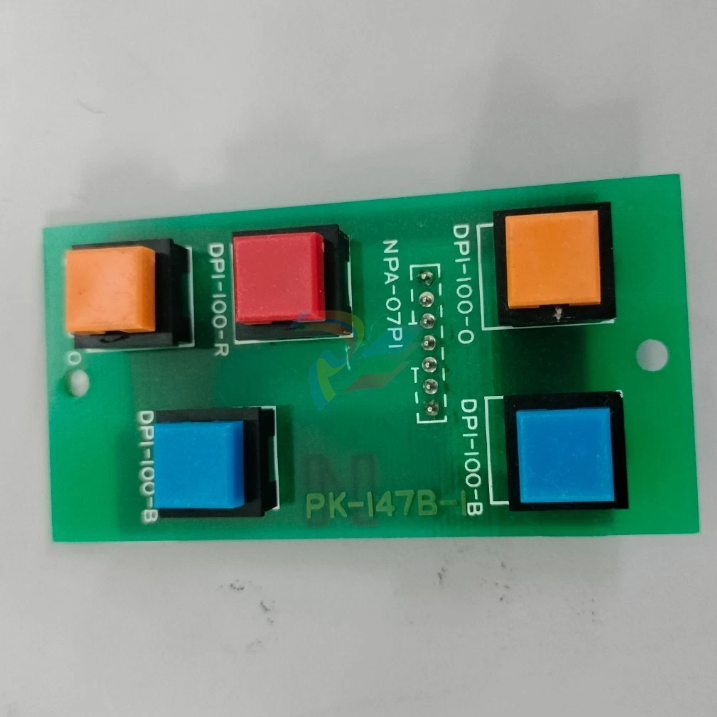
The Shinkawa PK-147B-1 and PK-147A-1 are high-precision industrial printed circuit board (PCB) modules manufactured by Shinkawa Electric Co., Ltd. (Japan). They are engineered for critical signal processing, machine condition monitoring, and control interface functions within turbomachinery protection frameworks and Shinkawa automated semiconductor equipment.
Product Introduction / Overview
The Shinkawa PK-147B-1 and PK-147A-1 Circuit Board Modules serve as core processing and interface cards within modular industrial rack systems. They condition, amplify, and manage analog or digital signals from proximity probes, displacement sensors, or system control loops, translating them into actionable data for central monitoring racks and PLCs.
The designations PK-147A-1 and PK-147B-1 represent specific circuit layout revisions, component iterations, or firmware designators within the PK-147 module family. Both variants maintain functional continuity across designated rack backplanes and monitoring enclosures.
Manufacturer: Shinkawa Electric Co., Ltd. (Made in Japan)
Module Code: PK-147 Series
Board Part Numbers: PK-147A-1 / PK-147B-1
Category: Industrial Control & Signal Processing Printed Circuit Board
Primary Applications: Turbomachinery Condition Monitoring, Machine Protection Systems, Semiconductor Manufacturing Equipment
Technical Table
| Attribute | Technical Specification |
| Model Code | Shinkawa PK-147 Series |
| Board Part Numbers | PK-147A-1 / PK-147B-1 |
| Manufacturer | Shinkawa Electric Co., Ltd. |
| Country of Origin | Japan |
| Module Type | Signal Processing & Interface Circuit Board |
| Form Factor | Rack-Mounted / Slide-in Card Slot |
| Bus / Interface | High-Density Multi-Pin Edge Connector / Backplane Bus |
| Power Supply | Backplane Bus Powered (DC Rated) |
| Cooling Method | Passive Air Convection |
| Compliance & Standards | Industrial EMC/ESD Standards, RoHS Compliant (variant dependent) |
Environmental Tolerance Conditions
To maintain optimal hardware performance and prevent premature component failure, the PK-147 modules must operate within the following environmental limits:
Operating Temperature Range: 0°C to +60°C (32°F to 140°F)
Storage Temperature Range: -20°C to +70°C (-4°F to 158°F)
Relative Humidity: 5% to 95% RH (Non-condensing)
Vibration Resistance: 10 Hz to 55 Hz, 0.15 mm amplitude (per IEC 60068-2-6)
Shock Resistance: 15g peak acceleration, 11 ms duration
Atmospheric Environment: Free of conductive dust, corrosive gas atmospheres, active organic solvents, and strong electromagnetic field interference (EMI).
Operating Instructions
1.Power Disconnection:Safety Prerequisite。
Isolate and disconnect main power to the target control chassis or rack cage. Ensure all auxiliary power lines are fully de-energized prior to handling internal hardware.
2.ESD Grounding Setup:Pre-Handling。
Equip a grounded anti-static (ESD) wrist strap connected to a verified earth ground to protect sensitive onboard microchips from electrostatic discharge.
3.Module Installation:Insertion。
Align the edges of the PK-147A-1 or PK-147B-1 board with the card cage guide rails. Slide the board smoothly into the slot until the rear multi-pin connector seats firmly into the backplane socket.
4.System Initialization:Verification。
Tighten front panel retaining screws to secure the card and complete chassis grounding continuity. Reapply system power and verify normal startup status via status LEDs.
Fault Diagnosis
When encountering operational issues related to the Shinkawa PK-147A-1 / PK-147B-1 modules, refer to the following diagnostic guidelines:
Symptom 1: Status LED Unlit / Module Unresponsive
Possible Cause: Poor backplane connection, bent gold-finger connector pins, or backplane power supply fault.
Corrective Action: Power down the rack, inspect connector pins for physical damage, re-seat the card firmly, and check the DC power rail output from the rack power supply.
Symptom 2: Signal Drift or Intermittent Channel Output
Possible Cause: Loose field wiring, surface oxidation on edge connectors, or excessive electrical interference.
Corrective Action: Clean gold-finger contacts with isopropyl alcohol. Inspect external cable shielding and ensure proper ground loop isolation.
Symptom 3: System Fault / Over-Range Alarm
Possible Cause: Open field sensor loop or onboard circuit component degradation.
Corrective Action: Swap the module with a known functional spare unit to determine if the fault originates from external field wiring or the circuit card hardware.
Related Models of the Same Series
The PK-147 series operates alongside other Shinkawa signal processing, interface, and control modules:
CPP-91A / CPP-107A / CPP-127: Vibration monitoring and signal conditioning cards.
FRP-177 / FRP-226 / FRP-227: Industrial control and signal processing PCB series.
MDP-104 (P-25-83A / P-25-83B): Microprocessor control and interface module.
IOP-44 / USP-17A: Auxiliary I/O and signal expansion modules.
Storage Conditions
Packaging: Keep the board sealed inside an anti-static ESD shielding bag with moisture-absorbing desiccant packs.
Storage Environment: Store in a clean, climate-controlled indoor facility at 15°C to 25°C with relative humidity below 60% (non-condensing).
Placement: Store upright on wooden or metal shelving off concrete floors; protect from direct sunlight, corrosive chemical fumes, and heavy structural vibration.
| User name | Member Level | Quantity | Specification | Purchase Date |
|---|


-
SHINKAWA VM-25 Condition Monitoring System UPDATED
-
SHINKAWA VM-5 SERIES OPTIONS
-
ABB SACO 64D4 Annunciator unit
-
ABB SPAU 140 C Synchro-check relay
-
HONEYWELL TDC 3000X Advanced Process Manager
-
HONEYWELL ENHANCED MICRO TDC 3000
-
VIBRO-METER VM600Mk2/ VM600 XMx16 + XIO16T extended condition monitoring modules
-
VIBRO-METER VM600Mk2/ VM600 RPS6U rack power supplies
-
VIBRO-METER VM600Mk2/ VM600 ABE056 slimline rack
-
VIBRO-METER VM600Mk2 RLC16Mk2 relay modules
-
VIBRO-METER VM600Mk2 MPC4Mk2 + IOC4Mk2 machinery protection and condition monitoring modules
-
VIBRO-METER VM600Mk2 CPUMMk2 + IOCNMk2 rack controller and communications interface module
-
VIBRO-METER VM600Mk2 CPUMMk2 + IOCNMk2 rack controller and communications interface module
-
ADLINK cPCI-8168 Advanced 6U CompactPCI 8-axis Motion Controller with One HSL Network
-
ADLINK PCI/PCIe-7300A, cPCI-7300 32-CH 80 MB/s High-Speed Digital I/O Cards
-
ADLINK cPCI-7248/7249R 48-CH DIO & Timer/Counter Cards
-
ADLINK PCI-7230/7233/7234. LPCI/LPCIe/cPCI-7230 32-CH Isolated DIO Cards
-
ADLINK cPCI-6965 Series Value 6U CompactPCI® Intel® Core™2 Duo
-
ADLINK cPCI-6910 Series 6U CompactPCI® Dual-Core Intel® Xeon® Processor LV / ULV Universal Blade
-
ADLINK CPCI-6670 6U CompactPCI Low Power Pentium® III SBC
-
ADLINK cPCI-6625/6 Series6U CompactPCI® PlusIO blade with Intel® Core™ i7/i3 Processor
-
ADLINK 3U CompactPCI CPU Modules
-
ADLINK CM-435 Extreme Rugged™ PC/104 Single Board Computer
-
ADLINK Centralized Motion Controllers PCI-8254/8258
-
ADLINK NuPRO-E43 PICMG® 1.3 Full-Size LGA1151 with 6th/7th Generation Intel® Core™ i7/i5/i3o
-
ADLINK DLAP-211-JNX/DLAP-211-JT2/ DLAP-211-Nano
-
نظام التحكم الرقمي في التحفيز الكهربائي BASLER DECS-200
-
Hirschmann RS30-1602O6O6SDAE compact OpenRail managed Ethernet switches
-
Hirschmann RS30-0802O6O6SDAE Ethernet switch
-
Hirschmann RS20-1600T1T1SDAE Management-type Ethernet switch
-
Hirschmann OCTOPUS 24M Limited Availability/Passive
-
Hirschmann MSP30-24040SCZ9MRHHE3A
-
Hirschmann MAR1040-4C4C4C4C9999SMMHRHHXX.X. Gigabit Ethernet Switch configurator
-
Hirschmann Industrial Ethernet Rail Switch SPIDER II, SPIDER II Giga, SPIDER II PoE
-
Hirschmann Industrial Ethernet Firewall EAGLE One
-
Hirschmann Industrial Security Router EAGLE20/30
-
Hirschmann Description and operating instructions RS2-xTX/xFX EEC
-
Basler Electric DIGITAL EXCITATION CONTROL SYSTEM DECS-300
-
Basler Electric DECS-200 Digital Excitation Control System
-
Basler Electric GENERATOR PROTECTION SYSTEM BE1-GPS100
-
Jaquet FT3000 Speed measurement system
-
Hirschmann Industrial Ethernet Ruggedized Switch MACH1000 Family
-
Basler Electric BESTCOMSPlus®
-
ETEL AccurET MODULAR 300 EA-P2M-300-xxxxxA controller
-
Basler Electric ES Series Protection Relays
-
ABB Multifunction Protection and Switchbay Control Unit REF542plus
-
EMERSON AMS 2140 Machinery Health Analyzer
-
Hirschmann Industrial Ethernet Rail Switch RS20 Basic Family
-
GE Grid Solutions P40U Px40 USB Adaptor
-
ABB ontinuous Gas Analyzers AO2000 Series AO2040CU Ex Central Unit in Category 2G
-
ABB Advance Optima AO2000 Series Continuous gas analyzers Models AO2020. AO2040
-
ABB Advance Optima Module Uras 14
-
SAACKE control optimization
-
SAACKE se@vis efficiency monitor
-
SAACKE se@vis pro
-
SAACKE se@vis eco
-
SAACKE se@vis compact
-
HIRSCHMANN Industrial ETHERNET Switch MICE MS20/MS30
-
HIRSCHMANN MICE Media modules
-
Kongsberg GL-10 Level Switch
-
B&R ACOPOSinverter P74 frequency converter
-
Beckhoff CX2020 | Basic CPU module (service phase)
-
Beckhoff CX1010 | Basic CPU module (service phase)
-
Beckhoff CX5120 | Embedded PC with Intel Atom® E3815
-
Beckhoff CP69xx-xxxx-0010 | Economy built-in Control Panel with DVI/USB Extended interface
-
Beckhoff CP29xx-0000 | Multi-touch built-in Control Panel with DVI/USB Extended interface
-
SAACKE Monoblock Rotary Cup Burner SKVJ-M
-
ABB Plantguard Fault Tolerant Technology Architecture and Software
-
OMRON H8PR-8/H8PR-8P H8PR-16/H8PR-16P H8PR-24/H8PR-24P Rotary Positioner
-
ABB PFSA107-Z42 DTU Stressometer Digital Transmission Unit
-
Nidec Mentor MP
-
IBA PC connection for high-precision data acquisition with ibaNet-E
-
IBA FO Connection to Reflective Memory
-
IBA FO Connection to Siemens Systems
-
IBA Interface Cards For Fiber Optic Connections
-
IBA Field and Drive Buses
-
IBA ibaPADU-S Modular System
-
IBA ibaMAQS
-
STUCKE SYMAP®ARC
-
STUCKE SYMAP®R
-
STUCKE SYMAP®Compact
-
MOOG G123-825-001 BUFFER AMPLIFIER
-
Motorola MVME5100 Series VME Processor Modules
-
ABB MEASUREMENT & ANALYTICS NGC8209 Natural gas chromatograph
-
Motorola MVME162 Embedded Controller
-
HIMatrix Safety-Related Controller System Manual for the Modular Systems
-
MOTOROLA MVME2400 Series VME Processor Module
-
Sieger System 57
-
KONGSBERG MRU product line continuation
-
Woodward easYgen-3100/3200 Genset Control for Multiple Unit Operation
-
Woodward MFR 300 Multifunction Relay / Measuring
-
ABB AX410, AX411, AX416, AX450 and AX455 Single and dual input analyzers
-
Woodward easYgen-1400 Technical Manual Genset Control
-
Woodward easYgen-400 Operation Manual Genset Control
-
Woodward High Output Digital Valve Positioner (DVP) DVP5000/DVP10000/DVP12000
-
Woodward High Output Digital Valve Positioner DVP5000 and DVP10000
-
Woodward TG611-13/-17 Overspeed Test Device Conversion Kit
-
Woodward MicroNet Safety Module (MSM)
-
Woodward 2301A Electronic Load Sharing and Speed Control 9905/9907 Series
-
Woodward-Service Bulletin 01671
-
UniOP eTOP40B 12.1” TFT color display
-
UniOP eTOP40 TFT Color display
-
UniOP eTOP33B 10.4” TFT color display
-
UniOP eTOP33C eTOP33-0050 Resistive touchscreen
-
UniOP eTOP30. eTOP32 eTOP32-0050 Human-machine interface equipment
-
UniOP eTOP20B and eTOP21B eTOP20B-0050
-
UniOP eTOP12 eTOP12-0050 Advanced human-machine interface equipment
-
UniOP eTOP11 eTOP11-0050 HMI
-
UniOP eTOP06 HMI
-
UniOP eTOP05EB eTOP05EB-DF45 HMI
-
UniOP eTOP05. eTOP05P Human-machine interface equipment
-
UniOP eTOP03 eTOP03-0046
-
UniOP eTOP507 507U2P1 eTOP Series 500 Human-Machine Interface
-
UniOP eTOP307
-
UniOP ePAD32B, ePAD33B and ePAD33BT ePAD33B-0350
-
UniOP ePAD05 and ePAD06
-
UniOP ePAD04 ePAD04-D046 Universal Operator Panel
-
UniOP ePAD03 and ePAD04
-
UniOP CP02F-02, CP02R-04
-
UniOP CP01R-04 Compact Human-Interface Device
-
UniOP ERT-16 - Industrial PLC Workstation
-
UniOP ePAD03 and ePAD04
-
UNIOP EPALM10-DA71 state-of-the-art handheld HMI
-
Watlow SERIES CLS200 SPECIFICATION SHEET
-
Detailed Explanation of B&R Power Panel 300/400: The Core of Industrial Automation Control
-
YOKOGAWA Models ANB10S, ANB10D, ANR10S, ANR10D Node Units (for FIO)
-
Woodward ESDR 4 Current Differential Protection Relay
-
Woodward easYgen-3000 Genset Control for

Add: High-tech Software Park, Xiamen City, Fujian Province
Mobile: +86-17750019513(WhatsApp)
Email: yy4291644@gmail.com
Website: https://www.abb-sis.com
.jpg)
.jpg)
.jpg)
.jpg)
.jpg)
.jpg)

-
Shinkawa WHF3006M Displacement Converter
-
Shinkawa JBP-220 (P-24-94A / P-24-94B) Circuit Board Module
-
SHINKAWA WKN-142K5 2-WIRE VIBRATION TRANSDUCER
-
Shinkawa FRP-321 (P-26-54A / P-26-54B) Circuit Board Module
-
Shinkawa IOP-160 (P-25-72A / P-25-72B) Circuit Board Module
