

Woodward CPC-II Current-to-Pressure Converter
CPC-II
Current-to-Pressure Converter
Applications
The CPC-II (current to pressure
converter, generation II) is an
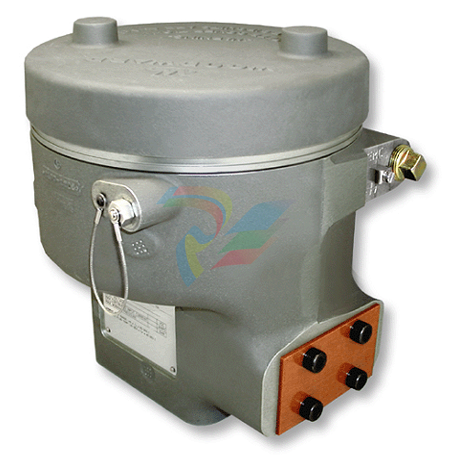
electrohydraulic pressure-regulating
valve control designed for use in
positioning single-acting steam turbine
valve servos. This CPC’s superb
accuracy and resolution make it ideal
for steam turbine valve control and
related turbine speed and load
control. The CPC accepts a 4–20 mA
pressure demand signal and
accurately controls oil pressure to
precisely position single-acting steam
turbine governor-valves. Precise and
stable steam valve control directly
relates to improved steam turbine
speed and load control and reduced
system mechanical wear.
The CPC’s redundancy features make it ideal for critical steam turbine applications,
where turbine up-time and availability are essential. This converter can be configured to
accept redundant pressure demand inputs, from one or two (redundant) controllers, and
vote the input to follow. Alternatively the CPC can be configured to accept signals from
both its internal oil pressure sensor and an external (redundant) oil pressure sensor, and
use the voted healthy signal.
The CPC’s robust design (strong actuator, corrosion-resistant material, single moving
rotary valve, and self-cleaning port design) makes it ideal for challenging applications
where dirty or contaminated oil may be present.
• Oil contamination
resistant
• Precise fluid
pressure control
• Stable & linear valve
control
• Included valve
linearization table
• Redundant
inputs/sensors for
critical applications
• Accepts signals
from redundant
controllers
• Redundant (dual)
CPCs
(Master/Slave)
functionality
• Standard mounting
and hydraulic
connections
• Self cleaning valve
algorithm
• Status & health
indication
Optionally two controllers can be connected to a single CPC in a redundant Master/Slave
fashion to allow the turbine to continue to operate if either turbine control fails, or on-line
changes are desired. Designed for use in applications requiring full redundancy,
optionally two CPCs can be applied in a dual-redundant fashion, simplifying the entire
system and control wiring.
Description
The CPC is an electrohydraulic pressure-regulating valve control that utilizes a very
accurate internal pressure sensor and PID controller to precisely control steam turbine
valves. The CPC consists of a valve-actuator assembly, pressure sensor, and electronic
driver module. The unit’s driver module accepts one (or two) 4–20 mA pressure setpoints
and compares these setpoints to the sensed oil pressure, to accurately control turbine
valve oil pressure.
The CPC controls oil pressure by porting supply-oil to its control-oil output port (turbine
valve control oil) or back to the system supply tank. This converter’s special PID
architecture allows it to perform very stable pressure control during normal conditions,
and respond in milliseconds to desired valve step changes during system or plant
transients. As a means of protecting the turbine, an internal valve-return-spring forces the
CPC to a failsafe position (port oil to drain) and safely close turbine control valves upon
any internal unit failure (electrical input power failure, pressure sensor failure, processor
failure, etc.).
The CPC is factory and/or field configurable via a computer
based service tool. The CPC’s PCI Service Tool uses a simple
user-friendly format to allow users to easily configure,
calibrate, and adjust all internal functions and PID control
settings. The CPC includes a 4–20 mA output channel to
indicate control oil pressure level, and unit alarm and shutdown
relay outputs for use as unit health and status indications into
the system controller or plant DCS.
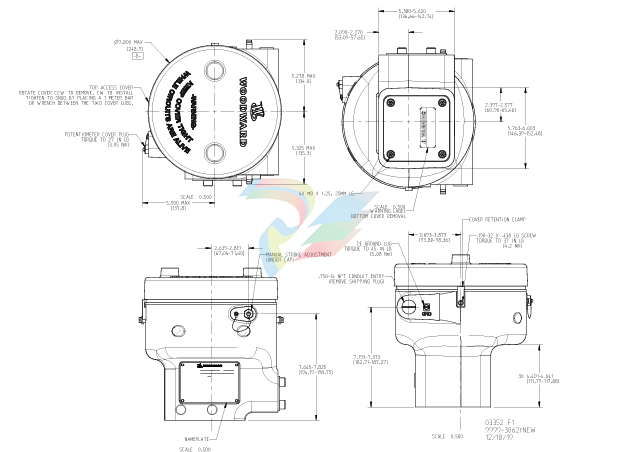
A Manual Stroke function allows users to manually stroke the
CPC output pressure (turbine valve position) locally at the
unit, via an internal Manual Stroke Screw. This local manual
stroke function is designed with built in security logic to
protect the users from un-intentional use of this function
during normal operation. Manual Stroke capability is also
available via remotely or locally via the CPC’s computer
based PCI Tool.
Since flow through single and staged inlet steam valves tend
to be non-linear throughout their flow range, turbine controls
are typically de-tuned to compensate for instability or
sluggish control points throughout this range. As a way of
allowing turbine control optimization, the CPC includes an
eleven-point linearization table to allow turbine OEMs or
users to compensate for poor valve linearization by digitally
linearizing the control to valve flow relationship.
Because many turbine users utilize redundant pressure
converters to increase system reliability, and because these
type of applications are prone to silting build-up problems in
the slave unit, a special “Silt Buster” (patent pending) routine
is also configurable to routinely remove internal silt build-up.
Accessories
A standard steel adapter plate is available to allow the CPC
to easily interface with systems designed for Voith I/H
converters.
Specifications
Performance
Accuracy: < ±0.2 % of full range
Repeatability: 0.1 % of full range
Temperature Drift: < ±0.01 % of full range /°C
Pressure stability: < ±2 % of setpoint
-
SHINKAWA MODEL VM-5Z5,6,7 POWER SUPPLY UNIT
-
SHINKAWA MODEL VM-5Y1,2,3 RELAY MODULE UNIT
-
SHINKAWA MODEL VM-5P3 PHASE MARKER UNIT
-
SHINKAWA MODEL VM-53 DUAL COMMUNICATION UNIT
-
SHINKAWA MODEL VM-52 BOTTOM HOLD MONITOR
-
SHINKAWA MODEL VM-51 ROD DROP MONITOR
-
SHINKAWA MODEL VM-5R TACHOMETER
-
SHINKAWA MODEL VM-5S DUAL TACHOMETER
-
SHINKAWA MODEL VM-5A DUAL VALVE
-
SHINKAWA MODEL VM-5E DUAL CASE
-
SHINKAWA MODEL VM-5L COMPLEMENTARY INPUT
-
SHINKAWA MODEL VM-5N RAMP DIFFERENTIAL
-
SHINKAWA MODEL VM-5D DUAL DIFFERENTIAL
-
SHINKAWA MODEL VM-5T DUAL THRUST MONITOR
-
SHINKAWA MODEL VM-5C ECCENTRICITY MONITOR
-
SHINKAWA MODEL VM-5C ECCENTRICITY MONITOR
-
SHINKAWA MODEL VM-5M DUAL PATH MONITOR
-
SHINKAWA MODEL VM-5B DUAL ACCELERATION MONITOR
-
SHINKAWA MODEL VM-5B DUAL ACCELERATION MONITOR
-
SHINKAWA MODEL VM-5U DUAL SEISMIC MONITOR
-
SHINKAWA MODEL VM-55 VIBRATION MONITOR
-
SHINKAWA VM-742B1-5 VIBRATION MONITORING SYSTEM CARD
-
Shinkawa PSP-17B P-24-64A P-24-64B Circuit Board Module
-
SHINKAWA MGP-67 PCB
-
Shinkawa JBP-278 P-22-48A-1 P-22-48B-1 Circuit Board Module
-
Shinkawa VM-721B 18-CHANNEL RELAY MODULE
-
Shinkawa FRP-337 P-26-54A P-26-54B Circuit Board Module
-
Shinkawa WKN-142K2-2 Vibration Transmitter
-
SHINKAWA VL-202A08L-1012 Rotor Position Monitor Probe Sensor
-
Shinkawa CPP-128 P-26-74A P-26-74B Circuit Board Module
-
Honeywell 51402755-100 PROCESSOR CARD
-
Honeywell 51107595-100 Power
-
HONEYWELL 51304544-100 Control Board
-
HONEYWELL 51109919-100 BOARD
-
HHoneywell 51204160-175 Digital Input Module
-
Honeywell 51304754-150 High Level Analog Input Module
-
HONEYWELL 51304690-100 DIGITAL INPUT CARD
-
Honeywell 51401635-150 COMM CONTROL
-
HONEYWELL 51204174-175 MC-TAOY 52 ANALOG OUTPUT BOARD
-
HONEYWELL 51400596-100
-
HONEYWELL 51401291-100 board card
-
HONEYWELL 51401642-150 I/O LINK MODULE
-
Honeywell LCN‑E Hub Power Supply 38500148‑300
-
Honeywell LCN‑E Hub redundant 38500143‑202 Twisted‑pair LCN
-
Honeywell LCN‑E Hub non‑redundant,38500143‑102
-
Honeywell Enhanced Micro‑TDC‑3000 System Unit MX‑DTAC01K2
-
Honeywell Enhanced Micro‑TDC‑3000 System Unit MX‑DTAB01K2
-
Honeywell Enhanced Micro‑TDC‑3000 System Unit MT11‑520
-
Honeywell STI‑CE Smart Transmitter Interface 51304516‑150
-
Honeywell STI Smart Transmitter Interface 51304516‑100 MC‑PSTX02
-
Honeywell ulse Counter IOP 51304386‑100 MU‑PPIX02
-
Honeywell DO Digital Output IOP‑CE 51304487‑150 CE version
-
Honeywell DO Digital Output IOP 51304487‑100 MC‑PDOX02
-
Honeywell TDC‑3000 SOE DI IOP,51402625-175 MC‑PDIS12
-
Honeywell TDC‑3000 DI Digital Input IOP‑CE 51304485‑150
-
Honeywell TDC‑3000 DI Digital Input IOP 51304485‑100 MC‑PDIX02
-
Honeywell TDC‑3000 AO Analog Output IOP 51304757‑100 MU‑PAOX02
-
Honeywell TDC‑3000 TC Thermocouple IOP 51304756‑100 MU‑TAMT03
-
Honeywell TDC‑3000 51304755‑100 MU‑TAMR03
-
Honeywell TDC‑3000 LLAI Multiplex AI IOP,51304362‑150
-
Honeywell TDC‑3000 HLAI Analog Input IOP‑CE, 51304363‑150
-
Honeywell TDC‑3000 HLAI Analog Input IOP,51304363‑100.4‑20mA
-
Honeywell TDC‑3000 HPM Power Supply,51401731‑100
-
Honeywell TDC‑3000 Standard 1986.HPM High‑Performance PM CPU,51402362‑100
-
Honeywell TDC‑3000 APM Advanced Process Manager CPU,51304459‑100
-
Honeywell TDC‑3000 Standard 1986.PM Process Manager CPU,51304362‑100
-
Honeywell TDC‑3000 NIM Network Interface Module,51304481‑200
-
Honeywell TDC‑3000 NIM Network Interface Module 51304481‑100
-
Honeywell TDC‑3000 BASIC,LCN Terminator Resistor,30732052‑001.Coaxial
-
Honeywell TDC‑3000 BASIC,Hiway Coupler,30753732‑001
-
Honeywell TDC‑3000 BASIC,LEPIU Low‑Energy PIU,4DP7APCFA309
-
Honeywell TDC‑3000 BASIC,HLPIU High‑Level PIU,4DP7APCFA106
-
Honeywell TDC‑3000 BASIC,Multifunction Controller(TDC‑2000 DHW),4DP7MFA103
-
Honeywell TDC‑3000 BASIC,Extended Controller(TDC‑2000 DHW),4DP7AXA102
-
Honeywell TDC‑3000 BASIC,Basic Controller(TDC‑2000 DHW),4DP7BBA101
-
Honeywell 51305508‑100 TDC‑3000 BASIC,XLCNE2 LCN Extender
-
Honeywell TDC‑3000 BASIC,E‑PLCG PLC Gateway,51400997‑200
-
Honeywell TDC‑3000 BASIC,PLNM Plant Network Module,51401163‑100
-
Honeywell TDC‑3000 BASIC,CG Computer Gateway,80360206‑001
-
Honeywell TDC‑3000 BASIC,HG High‑Speed Gateway,51304526‑100
-
Honeywell TDC‑3000 BASIC,HM History Module,51191596‑200
-
Honeywell TDC‑3000 BASIC,HM History Module,51191596‑100
-
Honeywell TDC‑3000 BASIC,AM Application Module CPU,51401551‑800.K2LCN‑8
-
Honeywell TDC‑3000 BASIC,AM Application Module CPU,51401551‑600.K2LCN‑6
-
Honeywell TDC‑3000 BASIC,AM Application Module CPU,51401551‑400,K2LCN‑4
-
Honeywell TDC‑3000 BASIC,AM Application Module CPU,51401551‑300.K2LCN‑3
-
Honeywell TDC‑3000 BASIC,AM Application Module CPU,51401551‑200,K2LCN‑2
-
Honeywell TDC‑3000 BASIC,US Universal Station CPU,51401288‑200
-
Honeywell TDC‑3000 BASIC,US Universal Station CPU,51401288‑100
-
SHINKAWA VM-21P1 Signal Conditioner 0-50MM 24VDC
-
Shinkawa RiverNew Vibration Transducer VK202 Series
-
Shinkawa Electric VM-3E2 Vibration Monitor Module
-
Shinkawa JBP-47 P-22-48A-1 / P-22-48B-1 Circuit Board Module
-
Shinkawa MODEL VM-5K DUAL VIBRATION MONITOR
-
Shinkawa CMU-15A (CMU15A) Industrial Camera Controller
-
Shinkawa CMU-13A CMU13A Industrial Camera Controller
-
Shinkawa EFU-10 (EFU10) Spark Generator Unit
-
Shinkawa UTC-1000 ZUP-02C Board
-
Shinkawa MDP-89 MDP89 P-24-674A P-24-674B Circuit Board Module
-
Shinkawa CB-1011005001 Signal Cable Assembly
-
SHINKAWA VL-202A08L-1002 Sensor VL-08020L01 Probe Cable F84N1695
-
Shinkawa VK-202A2 Driver & VL-202A08L-1A72 Proximity Sensor Probe
-
SHINKAWA VM-703B VIBRATION MONITORING SYSTEM CARD 2R05-002-P001C
-
Shinkawa BH-150-03 Signal Conditioner / Preamplifier Unit
-
Shinkawa BH-150 Signal Conditioner / Preamplifier Unit
-
Shinkawa Electric VM-3D2 Thrust Monitor Module
-
Shinkawa LCU-37 Monitoring module
-
Shinkawa LCU-44B-06 Local Control Unit Module
-
ABB 3BHE039724R2643 PPD513 high-performance programmable controller module
-
Samsung SSAS21-RTD Resistance Temperature Detector Input Module
-
Samsung SSAS21-AI Analog Input Module
-
Samsung SSAS21-DO Digital Output Module
-
Samsung SSAS21-DI Digital Input Module
-
Samsung SSAS21-CPU Central Processing Unit Module
-
Samsung SMTB-RTD RTD/TC Terminal Board
-
Samsung SMTB-AI Analog Input/Output Terminal Board
-
Samsung SMTB-DO Digital Output Terminal Board
-
Samsung SMTB-DI Digital Input Terminal Board
-
SAMSUNG SMBK-12 IOU Rack Backplane
-
SAMSUNG SMBK-08 IOU Rack Backplane
-
SAMSUNG SMPS-08 Rack Power Module
-
SAMSUNG SMCOM-08 Communication Expansion Card
-
SAMSUNG SMPI-8 Pulse Count Input Module
-
SAMSUNG SMTC-8 Thermocouple Input Module
-
SAMSUNG SMAOC-12 Analog Output Module (12CH)
-
SAMSUNG SMAOC-8 Analog Output Module (8CH)
-
SAMSUNG SMAIC-12 Analog Current Input Module (12CH)
-
SAMSUNG SMRTD-8 RTD Pt100 Temperature Input Module (8CH)

Add: High-tech Software Park, Xiamen City, Fujian Province
Mobile: +86-17750019513(WhatsApp)
Email: yy4291644@gmail.com
Website: https://www.abb-sis.com
.jpg)
.jpg)
.jpg)
.jpg)
.jpg)
.jpg)

-
SHINKAWA MODEL VM-5Z5,6,7 POWER SUPPLY UNIT
-
SHINKAWA MODEL VM-5Y1,2,3 RELAY MODULE UNIT
-
SHINKAWA MODEL VM-5P3 PHASE MARKER UNIT
-
SHINKAWA MODEL VM-53 DUAL COMMUNICATION UNIT
-
SHINKAWA MODEL VM-52 BOTTOM HOLD MONITOR
